

Looking back at news from Lisburn’s past

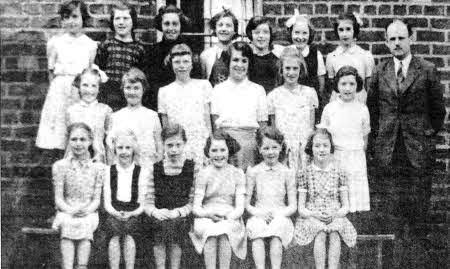
Pupils at Sloan Street Primary School pictured during
Coronation year -1953
Alcohol problems to be addressed
IN August 1985 people in Lisburn who might not have realised they had a problem with alcohol, were offered the chance to do something about it. The opportunity to listen and learn more about what was described as a ‘killer disease was created by Alcoholics Anonymous.
The organisation, which was already active in the borough with clubs in Railway Street and the Bridge Community Centre, was to hold a public information meeting in the town.
AA was concerned that people in general did not know enough about alcoholism and wanted to put Lisburn in the picture.
Interested parties, police, clergy, doctors, welfare workers, probation officers and businesses were all invited along with ordinary citizens. Those who attended would be told AA is a fellowship of men and women who share their experience, strength and hope with each other in order to solve their common problem and help others to recover form alcoholism.
The only requirement for membership was a desire to stop drinking. The primary purpose of the meetings was to stay sober and help other alcoholics achieve sobriety.
Lisburn jobless figures soar through the roof

IN August 1986 unemployment in Lisburn borough crashed through the roof.
A record 6,178 were registered as out of work in the area during the previous month, a depressing economic slump which set the alarm bells clanging.
The Mayor of the borough, Councillor Walter Lilburn, confessed to being depressed by the lengthening dole queue.
Mr Lilburn said the town was in the grip of lawlessness and criminality. This is instrinsically linked to the disastrous unemployment situation” he said.

The town’s first citizen feared that a recent spate of petrol bombing and intimidation would halt progress in Lisburn.
He appealed to councillors, church leaders and all responsible citizens to unite in standing out against the evil which was soiling the name of Lisburn.
The Mayor also hit out at what he described as ‘disastrous government policies’. “The economic strategy is as successful as their law and order efforts in Northern Ireland.”
Mr Lilburn suggested the Secretary of State Tom King would have been better employed assessing the abysmal failure of the Government in Northern Ireland rather than lauding its successes.
The Mayor said it was time the Government offered something more positive on the economic front.
Strong condemnation of the Government also came from Alderman Ivan Davis, who said the young had become a betrayed generation under the policies of Mrs. Thatcher’s Government. He said many older people had also been forced into early retirement.
Mr Davis warned that if economic thinking couldn’t grasp where the present situation was leading the future for the unemployed would be continued misery and despair, with even longer dole queues.
There were 4,166 men out without work in the borough area and almost 2,000 women.
A Department of Economic Development spokesman said that unemployment in the Province was running at an all-time high. “Obviously Lisburn is suffering along with the rest.”
He pointed out that the previous month was or traditionally a month when the jobless figures one were swollen by claimants from the education
field.
- A treat for the feet – slip on shoes in black brown were available at Dress-Rite in Longstone Street for £1.75 back in 1971
- The Council were considering what to do with the nine hole golf course it had bought (it’s now the site of the LeisurePlex) and Harry Secombe and Ann Shelton were staying in the Woodlands Hotel while appearing at the ABC to entertain the troops
Ambulance cover fears
IN August 1985 there was confusion and panic in Lisburn as the borough became caught up in the grip of one strike with another imminent.
Lagan Valley Hospital Lisburn’s health life-line, was left without ambulance cover and town centre banks found themselves virtually under siege.
Queues formed at the local branches of the four main banking outlets as worried members of the public rushed to withdraw money.
Production resumed
IN August 1971 Grundig tape recorder works at Dunmurry was to resume full producuction after four months of short time. The introduction of short time meant that the factory closed down for two days every fortnight and a resultant 20 percent drop in wage packets.
Page 1 | page 2 | Page 3 | Page 4 | Page 5 | Page 6 | Page 7 | Page 8 | Page 9 | Page 10 | Page 11 | Page 12 | Page 13 | Page 14 | Page 15 | Page 16 | Page 17 | Page 18 | Page 19 | Page 20 | Page 21 | Page 22 | Page 23 | Page 24 | Page 25 | Page 26 | Page 27 | Page 28 | Page 29 | Page 30 | Page 31 | Page 32 | Page 33 | Page 34 | Page 35 | Page 36 | Page 37 | Page 38 | Page 39 | Page 40 | Page 41 | Page 42 | Page 43 | Page 44 | Page 45 | Page 46 | Page 47 | Page 48 | Page 49 | Page 50 | Page 51 | Page 52 | Page 53 | Page 54 | Page 55 | Page 56 | Page 57 |
Ulster Star
03/02/2012

Preserving the Digital Archive (1996–2026) of Lisburn & the Lagan Valley
Lisburn.com is Northern Ireland’s first community web archive, chronicling our townlands, local businesses, cultural heritage, and shared history for 30 years (1996–2026). Freely accessible to all.


Leave a Reply